Understanding the Molecular Foundations of Peptide Science
Peptides are short chains of amino acids linked by amide (peptide) bonds, serving as the fundamental building blocks of proteins and playing critical roles in virtually every biological process. This hub explores the chemistry, structure, and synthesis of peptides from a rigorous scientific perspective.
What You'll Learn
- How peptide bonds form through dehydration synthesis and how they break via hydrolysis
- The differences between linear, cyclic, and modified peptide structures
- Modern synthesis methods including solid-phase peptide synthesis (SPPS)
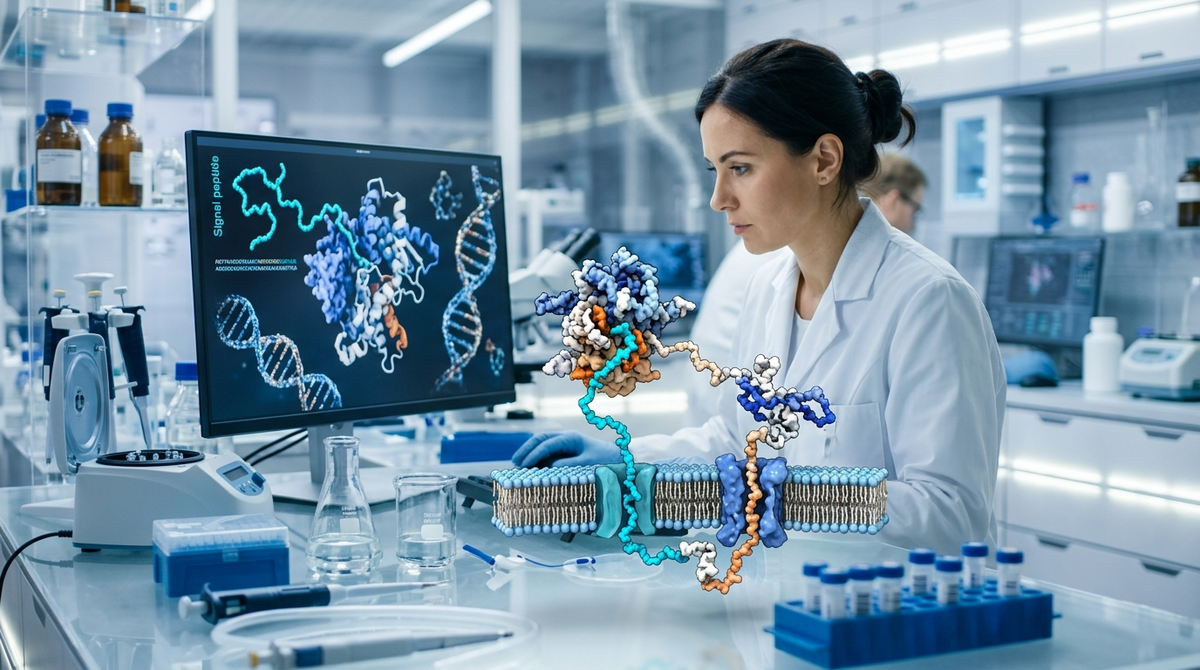
- How signal peptides direct protein trafficking within cells
- Techniques for measuring peptide bioavailability and stability
Why Peptide Biochemistry Matters
Understanding peptide chemistry is essential for researchers, clinicians, and anyone working with therapeutic peptides. The stability of the amide bond, the geometry of the peptide backbone, and the interplay of hydrogen bonding all determine how a peptide folds, functions, and interacts with biological targets.
From ribosomal catalysis of peptide bonds during translation to the industrial-scale synthesis of pharmaceutical peptides, this field bridges fundamental chemistry with cutting-edge biomedical applications. Our articles cover both foundational concepts and the latest advances in peptide science.
Key Topics in This Hub
Articles in this hub span peptide bond formation mechanisms, structural geometry, sequence analysis, solid-phase synthesis, bioavailability measurement, and the role of hydrogen bonding in secondary structure formation. Whether you're a student of biochemistry or a seasoned researcher, you'll find authoritative, referenced content here.