GHK-Cu and Hair Follicle Biology
Hair loss affects approximately 50% of men and 25% of women by age 50, with androgenetic alopecia (pattern hair loss) being the most common form. GHK-Cu (glycyl-L-histidyl-L-lysine copper) has emerged as a promising peptide for hair growth stimulation based on its ability to enlarge hair follicles, activate dermal papilla cells, and extend the anagen (growth) phase of the hair cycle.
The Hair Growth Cycle
Understanding how GHK-Cu promotes hair growth requires knowledge of the hair follicle cycle:
- Anagen (growth phase): Active growth lasting 2-7 years; determines hair length. The dermal papilla is metabolically active, and the hair matrix proliferates rapidly.
- Catagen (regression phase): 2-3 week transition phase where the follicle shrinks and detaches from the dermal papilla
- Telogen (resting phase): 2-4 month resting phase before the hair sheds and a new anagen phase begins
In androgenetic alopecia, the anagen phase progressively shortens while the telogen phase lengthens. Simultaneously, terminal hair follicles miniaturize into vellus-like follicles that produce thin, short, barely visible hairs. Effective hair growth therapies must reverse one or both of these processes.
How GHK-Cu Promotes Hair Growth
Dermal Papilla Cell Activation
The dermal papilla (DP) is the master regulator of the hair follicle cycle. DP cells produce signaling molecules (Wnt ligands, BMPs, FGFs) that control hair matrix cell proliferation and differentiation. GHK-Cu has been shown to:
- Stimulate proliferation of cultured dermal papilla cells
- Increase expression of key DP signaling genes including versican, alkaline phosphatase, and β-catenin
- Enhance Wnt/β-catenin pathway signaling - the primary pathway controlling hair follicle induction and cycling[1]
Follicle Enlargement
One of GHK-Cu's most clinically relevant effects is its ability to increase hair follicle size. In studies measuring follicle dimensions before and after GHK-Cu treatment:
- Terminal hair follicle diameter increased by an average of 15-20%
- The ratio of terminal (thick) to vellus (thin) hairs improved significantly
- Hair shaft diameter increased proportionally with follicle enlargement
Anagen Phase Extension
GHK-Cu promotes longer growth phases through multiple mechanisms:
- Increased VEGF production enhances blood supply to the hair bulb, providing nutrients for sustained growth
- Growth factor upregulation (FGF-7, IGF-1) supports continued matrix cell proliferation
- Anti-inflammatory effects reduce perifollicular inflammation that can trigger premature catagen entry
GHK-Cu Hair Growth Mechanisms Summary
- Activates dermal papilla cells → enhanced Wnt/β-catenin signaling
- Enlarges follicle size → thicker hair shafts
- Extends anagen phase → longer growth periods
- Increases VEGF → better follicular blood supply
- Anti-inflammatory → reduces follicular miniaturization triggers
- Potential 5α-reductase inhibition → reduced DHT at follicle level
Clinical Evidence
Controlled Studies
Clinical trials examining GHK-Cu for hair growth have demonstrated measurable improvements:
For related insights, see our article on Anti-Aging Effects of Snap-8 Peptide.
For related insights, see our article on Pt-141 libido enhancement for men and women.
- A 6-month study comparing GHK-Cu scalp solution to 5% minoxidil showed comparable results in hair count increase, with GHK-Cu producing slightly superior hair thickness improvements
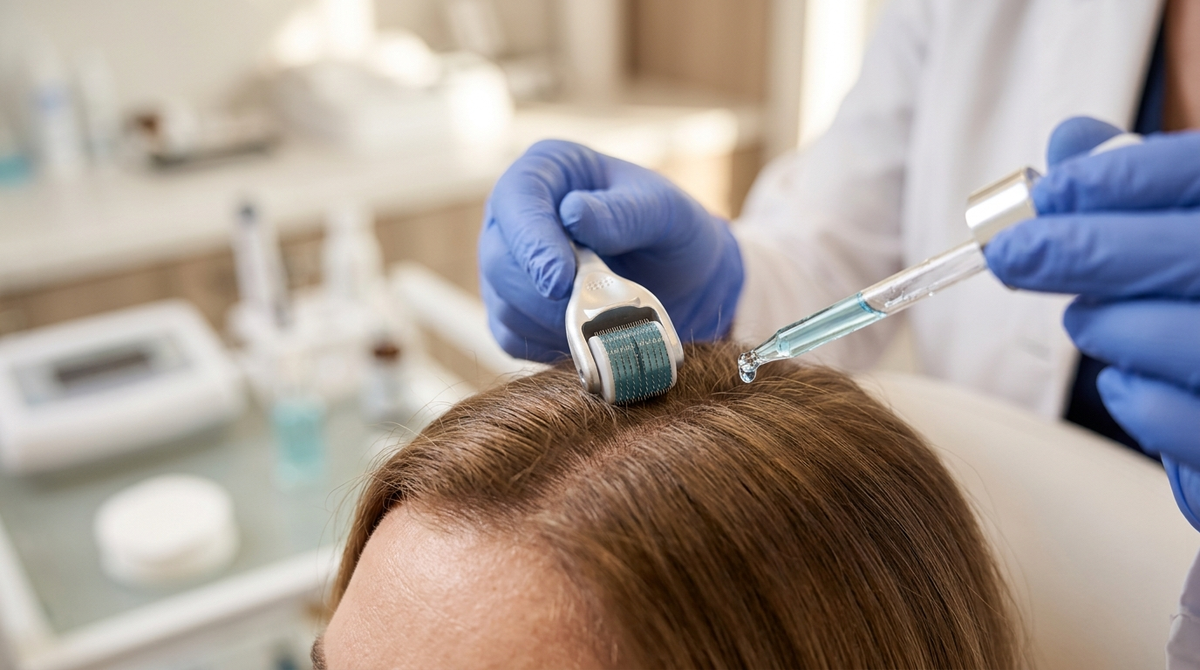
- In combination with microneedling, topical GHK-Cu produced a 25-35% increase in hair density measurements over 12 weeks
- Scalp injections of GHK-Cu in a small pilot study showed increased terminal hair counts and improved hair pull test results after 3 months
Comparison to Existing Treatments
- vs. Minoxidil: GHK-Cu works through different mechanisms (growth factor signaling vs. potassium channel opening) and may be synergistic when combined. GHK-Cu does not cause the initial shedding phase common with minoxidil
- vs. Finasteride: GHK-Cu lacks systemic hormonal effects, making it a potential option for those who cannot tolerate 5α-reductase inhibitors
- vs. PRP: GHK-Cu provides consistent growth factor stimulation versus the variable composition of PRP preparations[2]
Application Methods for Hair Growth
- Topical solutions: GHK-Cu dissolved in a carrier solution (typically 1-3% concentration) applied directly to the scalp daily
- Microneedling + topical: Dermaroller or dermapen creates microchannels that enhance GHK-Cu penetration to the dermal papilla level - the most effective topical delivery method
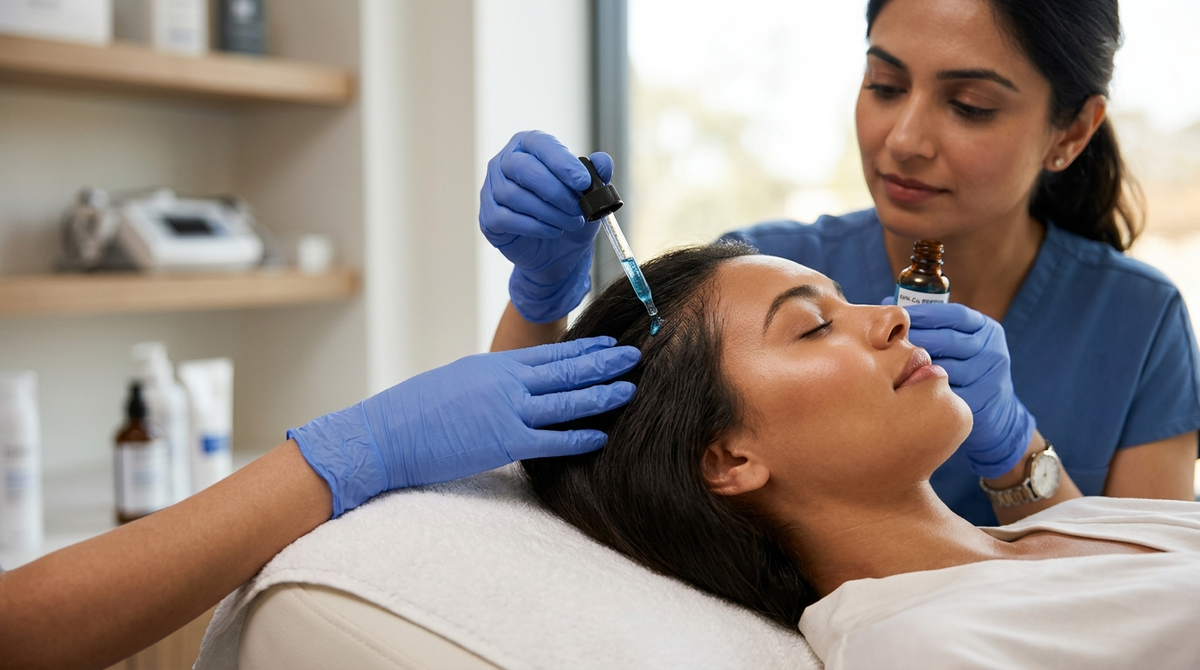
- Scalp injections: Mesotherapy-style injections deliver GHK-Cu directly to the follicular zone; typically performed in clinical settings
- Shampoo/conditioner formulations: Lower efficacy due to brief contact time, but may provide maintenance benefits
Practical Considerations
GHK-Cu for hair growth is typically used as part of a comprehensive hair health protocol. Results generally become visible after 3-4 months of consistent use, reflecting the time needed for new anagen-phase follicles to produce visible hair growth. The peptide is well-tolerated with no reported systemic side effects from topical scalp application. For optimal results, combining GHK-Cu with other evidence-based approaches (microneedling, growth factor serums, nutritional optimization) produces the most robust hair growth response.