
Introduction
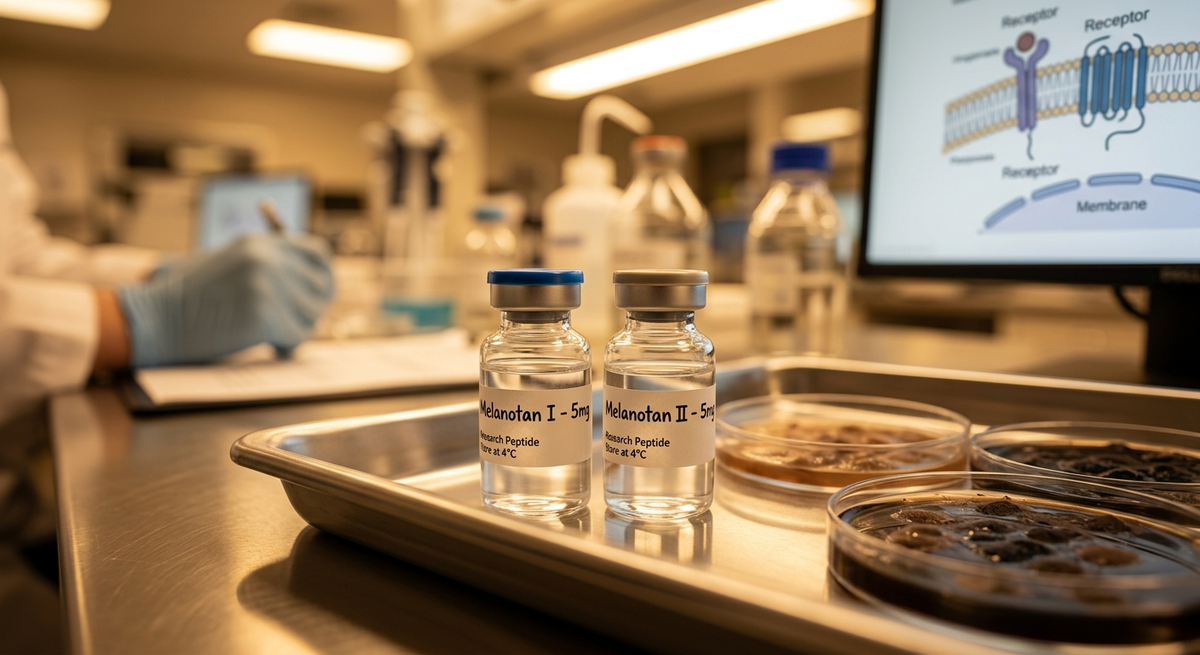
Melanotan I (afamelanotide, MT-I) and Melanotan II (MT-II) are both synthetic analogs of alpha-melanocyte stimulating hormone (alpha-MSH) that stimulate melanogenesis. However, they differ substantially in structure, receptor selectivity, and the range of biological effects they produce. MT-I is a linear peptide with high selectivity for the MC1R receptor, while MT-II is a cyclic peptide that activates multiple melanocortin receptors (MC1R, MC3R, MC4R, MC5R), leading to broader physiological effects including sexual arousal and appetite suppression.

Mechanism of Action Comparison
Melanotan I is a 13-amino acid linear analog of alpha-MSH with high specificity for the melanocortin 1 receptor (MC1R) on melanocytes. MC1R activation triggers cAMP-dependent signaling that upregulates tyrosinase activity and eumelanin production, producing skin darkening. MT-I has minimal activity at other melanocortin receptor subtypes, making it a relatively clean tool for melanogenesis research.
Melanotan II is a shorter, cyclic 7-amino acid peptide with potent activity across MC1R, MC3R, MC4R, and MC5R. Beyond melanogenesis, MC4R activation in the hypothalamus produces appetite suppression and sexual arousal effects. MC3R activation influences energy homeostasis and fat metabolism. This broad receptor profile gives MT-II a wider range of biological effects but reduced specificity[1].
Key Differences
| Feature | Melanotan I | Melanotan II |
|---|---|---|
| Structure | Linear, 13 amino acids | Cyclic, 7 amino acids |
| MC1R Selectivity | High | Moderate (non-selective) |
| Melanogenesis | Strong | Strong |
| Sexual Arousal Effects | None | Significant (MC4R) |
| Appetite Effects | Minimal | Suppression (MC4R) |
| Regulatory Status | FDA-approved (Scenesse) for EPP | Not approved, research only |
| Nausea Side Effect | Mild | More common |
Research Applications
Melanotan I is investigated in photoprotection research, erythropoietic protoporphyria (EPP), vitiligo treatment, and UV damage prevention studies. Its MC1R selectivity makes it ideal for melanogenesis-specific research. Melanotan II is studied for sexual dysfunction research (its MC4R activation led to the development of PT-141), appetite regulation, and multi-receptor melanocortin biology. MT-II's broader activity also makes it relevant for obesity and metabolic research.
Which to Choose for Your Research?
For melanogenesis and photoprotection studies requiring receptor specificity, Melanotan I is the appropriate choice. For research involving sexual function, appetite regulation, or multi-receptor melanocortin pathway investigation, Melanotan II provides the broader pharmacological profile. Note that MT-I is the only melanocortin analog with regulatory approval (Scenesse for EPP in the EU), giving it a stronger clinical evidence base for dermatological applications.