Introduction
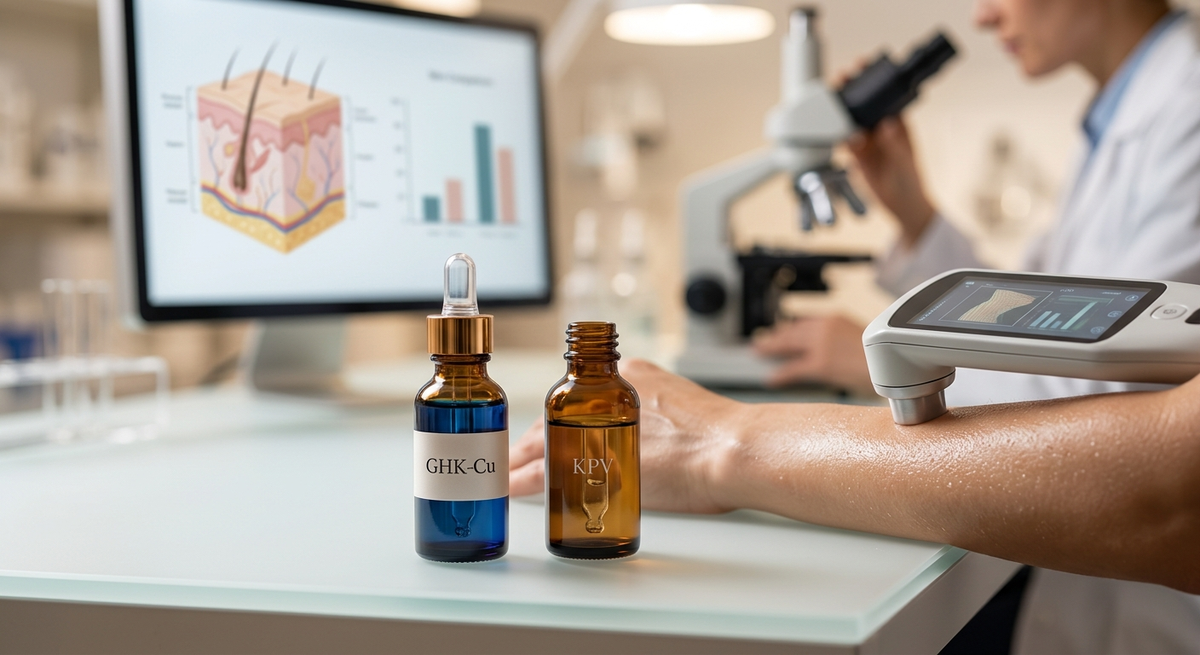
GHK-Cu and KPV are both investigated in dermatological research, but they address skin health through different mechanisms. GHK-Cu is a copper-peptide complex that stimulates collagen synthesis, extracellular matrix remodeling, and wound healing — a regenerative approach. KPV is an anti-inflammatory tripeptide that directly inhibits NF-kB signaling to suppress skin inflammation. Their mechanisms are complementary, addressing the regenerative and inflammatory axes of skin biology respectively.
Mechanism of Action Comparison
GHK-Cu modulates over 4,000 genes involved in skin biology. It upregulates collagen types I and III, elastin, decorin, and glycosaminoglycan production while suppressing metalloproteinases (MMP-1, MMP-2) that degrade the extracellular matrix. Its copper delivery enhances lysyl oxidase activity for collagen cross-linking and stimulates antioxidant enzymes (SOD, glutathione). GHK-Cu also promotes angiogenesis and nerve outgrowth in wound contexts[1].
KPV (Lys-Pro-Val) inhibits the NF-kB inflammatory cascade by preventing IkB-alpha phosphorylation and degradation, blocking nuclear translocation of the p65 subunit. This suppresses production of TNF-alpha, IL-1beta, IL-6, and other pro-inflammatory cytokines in skin cells. KPV also reduces oxidative stress in inflammatory skin conditions and has demonstrated efficacy in murine models of dermatitis and psoriasis-like inflammation.
Key Differences
| Feature | GHK-Cu | KPV |
|---|---|---|
| Primary Action | Regeneration (collagen, ECM) | Anti-inflammatory (NF-kB inhibition) |
| Collagen Synthesis | Strong stimulation | Not a primary effect |
| Inflammation Reduction | Moderate (indirect) | Strong (direct pathway inhibition) |
| Wound Healing | Comprehensive (angiogenesis, remodeling) | Via inflammation resolution |
| Best For | Aging skin, wound repair, scars | Inflammatory skin conditions |
| Size | Tripeptide + copper | Tripeptide (3 amino acids) |
Research Applications
GHK-Cu is studied in anti-aging dermatology, wound healing, scar remodeling, hair follicle biology, and cosmeceutical development. KPV is investigated in inflammatory dermatoses (psoriasis, eczema, dermatitis), gut-skin axis research (due to its oral anti-inflammatory activity), and topical anti-inflammatory formulations. The combination is available as a research blend for protocols addressing both inflammation and regeneration simultaneously.
Which to Choose for Your Research?
For anti-aging, collagen-focused, or wound healing skin research, GHK-Cu is the primary choice with the deepest evidence base. For inflammatory skin conditions where NF-kB pathway suppression is the primary endpoint, KPV provides a more targeted anti-inflammatory tool. For comprehensive dermatological protocols, both peptides can be used together to address inflammation suppression and tissue regeneration in parallel.